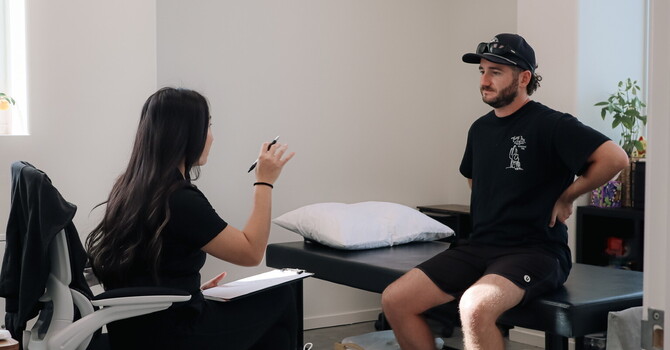
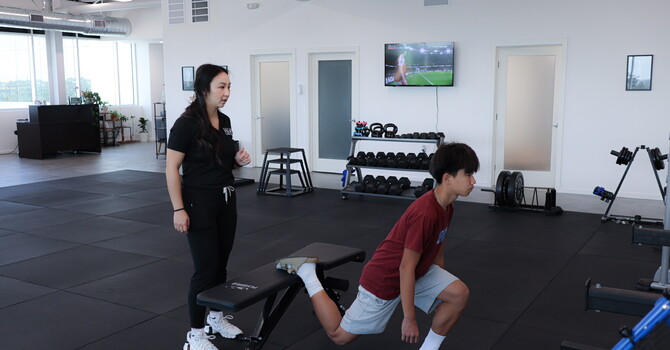
For this blog post, we wanted to spotlight one of our partners, Freehab Therapy, so that everyone can learn a little more about what they do and how they’re impacting our community. Freehab Therapy is a 501(c)(3) nonprofit providing no-cost mobile PT/OT/SLP for neurological conditions, founded in Carlsbad in 2024 by Dr. Matthew Eclevia, PT, DPT, NCS. In this interview with Matt, we hope to get an inside look on how this nonprofit came about and what their goals are for the future.
Meet Matthew Eclevia, Founder of Freehab Therapy
Matthew Eclevia, a Doctor of Physical Therapy, from Chapman University, and is a board certified Neurologic Clinical Specialist (NCS). Through his work as a therapist in an Acute Rehab Unit (ARU), he became frustrated with the limited access of care for the neurologic population once they have progressed from acute and/or subacute setting. He wondered if there was a way to further assist patients outside of the financial and structural restraints of today's healthcare system. With his colleagues, he sought out a solution.
Origin & Mission
What was the moment that made you decide to start Freehab Therapy, and why focus specifically on neurological conditions?
My experience working with the neurologic population in the acute inpatient setting played a significant role in shaping FreeHab Therapy into what it is today. I chose to focus on neurological conditions because this population can face unique and significant barriers to accessing quality rehabilitation services. Transportation, in particular, can be a major challenge for individuals with mobility limitations and their families. By providing mobile, in-home therapy services, FreeHab Therapy helps eliminate the transportation barrier and brings compassionate, high-quality rehabilitation directly to those who need it most.
For people who've never heard of "pro-bono mobile therapy," how would you explain what that actually looks like day-to-day?
Pro-bono mobile therapy means bringing rehabilitation directly to people who may otherwise have difficulty accessing it, at no cost to the patient.Day-to-day, that can look like a physical, occupational, or speech therapist traveling to a patient’s home and providing one-on-one treatment based on their individual goals and needs. For someone recovering from a stroke, that might mean working on walking, balance, and getting safely around their home. For someone living with a spinal cord injury, it could involve improving transfers, wheelchair mobility, or independence with daily activities. For someone with Parkinson’s disease, it might focus on mobility, balance, and maintaining function.But the therapy itself is only part of what we do. We also work with patients and caregivers to understand their challenges, provide education, identify useful resources, and help them navigate the rehabilitation process.
What gap in the North County San Diego healthcare system were you trying to fill?
Many people leave the hospital or outpatient rehabilitation with continued therapy needs, but accessing those services can become difficult once traditional coverage, transportation, or caregiver support becomes a limitation. For individuals with neurological conditions, even small barriers can make it harder to maintain the progress they made during rehabilitation.FreeHab Therapy was created to help bridge that gap by providing pro-bono, mobile rehabilitation services directly in the patient’s home or community. Our goal is not to replace the existing healthcare system, but to complement it by helping people continue working toward mobility, independence, and quality of life when traditional services may no longer be accessible.
Understanding Neuro Rehab
What's the difference between physical, occupational, and speech therapy for someone recovering from a stroke or neurological event?
The important distinction is that neurological recovery isn't just about walking again. Someone may regain the ability to walk but still struggle with dressing, communicating, or remembering information. PT, OT, and SLP work together to address these different aspects of recovery and help the individual return to the activities and roles that are meaningful to them.For FreeHab Therapy, that multidisciplinary approach is especially important because our goal is not simply to improve a patient's impairment. We want to help improve their ability to participate in everyday life.
What are some common diagnoses or conditions that Freehab therapists treat?
Stroke, Multiple Sclerosis, Parkinson's Disease, Traumatic Brain Injury, Vestibular Dysfunction and Vertigo, Amyotrophic Lateral Sclerosis, Neuromuscular Diseases, and Spinal Cord Injury.
How does mobile, in-home therapy compare to going into a clinic? Who is it best suited for?
Because FreeHab is mobile, we can also treat patients in the environment where they actually live. That allows our therapists to identify real-world challenges and work directly on strategies that can translate into the patient's everyday life.
What does a typical patient's first few sessions with Freehab look like?
A typical patient’s first few sessions with FreeHab Therapy are focused on understanding the person, identifying their goals, and creating a practical plan for recovery.The first session is about getting to know the patient beyond their diagnosis. Our therapist completes an initial evaluation, looks at mobility and functional abilities, identifies barriers within the home or community, and most importantly, listens to what the patient wants to be able to do. That might be walking safely around the house, getting dressed independently, returning to a favorite hobby, or being able to participate more fully in the community.The following sessions are focused on those individualized goals. Depending on the patient's needs, this could include mobility and balance training with PT, activities of daily living and adaptive strategies with OT, or communication and cognition with SLP.
Where Orthopedic and Neurologic Care Meet
Valor PT works a lot with athletes and active adults recovering from orthopedic injuries. Where do you see orthopedic and neurologic rehab overlapping or informing each other?
At the foundation, both are about helping someone move better, function better, and regain confidence in their body.Orthopedic rehab often focuses on restoring strength, mobility, coordination, and movement patterns after an injury. Neurologic rehabilitation uses many of those same principles, but the challenge may be that the nervous system itself has been affected by something like a stroke, spinal cord injury, or Parkinson’s disease.One area where orthopedic rehab can really inform neurologic rehab is strength and conditioning. People with neurological conditions can benefit from progressive strengthening, cardiovascular exercise, balance training, and task-specific practice just like athletes do. The difference is that we may have to modify the approach based on fatigue, motor control, sensation, cognition, or other neurological impairments.
I also think there is a valuable mindset that carries over from working with athletes: focus on what the person wants to get back to doing.
What made Valor PT and Freehab Therapy a natural fit as partners?
We share the same fundamental belief that rehabilitation should be personalized, accessible, and focused on helping people get back to the life they want to live. What makes the partnership particularly meaningful is the community-focused mindset. FreeHab was created to address barriers to care, and partnering with a local organization like Valor PT allows us to build connections within the rehabilitation community, share knowledge, and create more opportunities for people to access the resources they need.
Access to Care and Serving San Diego County and Orange County
Who qualifies for Freehab's pro-bono services, and what are options for those who don’t qualify?
To qualify, patients must:
1) NOT be currently receiving outpatient or home health services
2) Have a qualifying diagnosis. Qualifying diagnoses include: Stroke, Multiple Sclerosis, Parkinson's Disease, Traumatic Brain Injury, Vestibular Dysfunction and Vertigo, Amyotrophic Lateral Sclerosis, Neuromuscular Diseases, and Spinal Cord Injury.
How can the community support Freehab's mission through donations, referrals, or volunteering?
Donations directly help us provide pro-bono rehabilitation services to individuals who otherwise may not be able to access care. Contributions can help cover therapist time, therapy equipment, and resources that allow us to bring services directly into the home and community.
Friends of FreeHab is a community of individuals and organizations who believe that everyone should have access to quality rehabilitation, regardless of their financial or transportation barriers. Through recurring or ongoing donations, Friends of FreeHab help sustain the therapists, equipment, and resources that allow FreeHab Therapy to bring rehabilitation directly to individuals in their homes and communities.
Every contribution helps us continue providing care to people living with neurological conditions such as stroke, spinal cord injury, Parkinson’s disease, multiple sclerosis, and other neurological impairments.
As for volunteering, we welcome people who want to contribute their time, professional expertise, event support, or community connections. Whether someone is a healthcare professional, business owner, student, or simply someone who believes in our mission, there is often a way to get involved.
And sometimes, simply spreading the word is incredibly valuable. The more people who understand that pro-bono mobile neurological rehabilitation exists, the more likely we are to reach someone who needs it.
Looking Ahead
Where do you see Freehab Therapy in the next few years: new programs, expanded coverage area, anything exciting in the pipeline?
I see FreeHab growing in a few exciting directions over the next several years: expanding our mobile pro-bono therapy services, developing additional programs that support people beyond traditional therapy, and ultimately reaching more individuals throughout San Diego and Orange County.
One area I’m particularly excited about is FreeHab Navigators, where we can help individuals and families better understand their rehabilitation options, navigate the transition home after hospitalization or rehabilitation, and connect with community resources. I think there is a real need for that type of support, especially for families who suddenly find themselves trying to navigate the healthcare system after a neurological event.
We also want to continue developing programs that promote long-term independence and community participation, rather than focusing solely on a patient's initial rehabilitation. That could include wellness and maintenance programs, community activities, equipment and therapy resources, and opportunities for individuals with neurological conditions to stay active and connected.
Geographically, our goal is to grow thoughtfully. We want to establish a strong foundation in North County San Diego before expanding our reach to additional communities throughout the county. As our funding, volunteer network, and clinical partnerships grow, so does our ability to serve more people.
Ultimately, the vision is for FreeHab to become more than just a provider of pro-bono therapy. We want to build a community-based network that helps people with neurological conditions access rehabilitation, resources, and opportunities to live as independently as possible.
What's one story from a patient — kept anonymous if needed — that reminds you why this work matters?
After suffering a hemorrhagic stroke, Gabriel spent time in an acute rehabilitation unit before eventually being discharged home. Like many individuals recovering from a neurological event, leaving the hospital was only the beginning of his recovery. Gabriel had a clear and meaningful goal: he wanted to return to work and regain his independence.
Unfortunately, after returning home, he faced barriers that prevented him from accessing both home health and outpatient physical therapy services. Despite being motivated to continue his rehabilitation, he didn’t have the access to care he needed to keep moving forward.
That’s where FreeHab Therapy was able to step in.
Our therapists worked with Gabriel directly in his home, focusing on the mobility, strength, balance, and functional skills he needed to safely navigate his everyday life and work toward his personal goals. By bringing therapy to him, we were able to eliminate some of the barriers that had prevented him from continuing his rehabilitation.
Today, Gabriel has returned to work and is walking independently; two milestones that once seemed much harder to reach.
His story represents what FreeHab Therapy is all about: meeting people where they are, removing barriers to rehabilitation, and helping individuals with neurological conditions regain the independence and dignity to return to the lives they want to live.
We're grateful to Matthew and the entire Freehab Therapy team for taking the time to share their story and for the work they do every day to make neuro rehab accessible to people who need it most. Whether you're recovering from a stroke and need no-cost, in-home neurologic care, or you're an athlete working through an orthopedic injury, our two practices exist for the same reason: to help this community move well and recover fully. If you or someone you love could benefit from Freehab's pro-bono program, reach out to Freehab Therapy here to see if you qualify, or learn more about their mission at freehabtherapy.org. And if it's an orthopedic or sports injury you're dealing with, schedule a visit with Valor PT — we'd love to help.
About Freehab Therapy: Freehab Therapy is a 501(c)(3) nonprofit founded in Carlsbad in 2024, providing no-cost, mobile physical, occupational, and speech therapy to individuals with neurological conditions across North County San Diego and South Orange County. Learn more or refer a patient at freehabtherapy.org.
About Valor Physical Therapy: Valor Physical Therapy is a cash-based, one-on-one physical therapy practice in Carlsbad, CA, helping active adults and athletes move and recover without pain. Learn more or book an appointment at valor-pt.com.
Valentine Ngo
Contact Me