It’s been more than 6 months since I injured my knee during a Brazilian Jiu Jitsu tournament. If you missed it, you can read my first blog post about this BJJ knee injury. My MRI and a visit with a sports medicine doctor confirmed a meniscus tear and an LCL tear (the ligament on the outside of the knee), and I treated the knee conservatively, without surgery. The first few months consisted of lots of PT, walking with crutches, and then moving around with a hinge brace. Range of motion was one of my biggest challenges and was something I worked on throughout the first 6 months after the injury happened. My muscles also atrophied during the first few months, but since then, I’ve been working hard to strengthen all the muscles around the knee and hip. Now, I’ve been able to do all my daily activities without any issues and I’m back to BJJ.
There were so many challenging parts of this recovery process that not many people talk about. For me, a lot of them came after the crutches and the brace were gone, when it was time to get my body ready for the sport again. In this update, I wanted to share that stretch: what I could control when I got back on the mat and why I don’t tell athletes to stop their sport completely until they’re 100% better.
When daily life is fine and BJJ still feels hard
The transition from walking around without a brace to starting regular physical activity again was difficult. Once you’ve reached a point where you’re not limited at home or work, you’re mentally eager to return to your sport. However, when you do, you’re reminded again of how limited you really are. Movements in a particular sport are typically very different from movements you do in your everyday life, which is why it’s so important to continue to train your body to be able to handle the loads of your sport.
At this point in my rehab, it was extremely discouraging because my body felt so out of shape, but I still wasn’t able to get back into the activities and frequency of activities that I was doing before. Without the constant reminder of the crutches or brace, it’s also so much easier to forget or miss workouts and exercise. When I help patients with knee pain who are going through the same period of their rehab, I encourage them to slowly start to increase their activities and get back into their old routines.
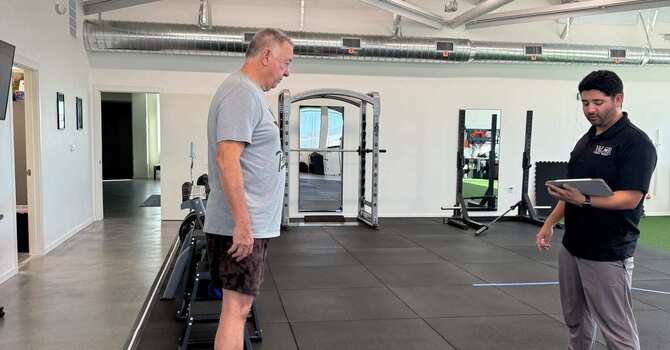
This is also a stage where numbers can help. At our clinic, we use VALD performance testing to objectively test strength, power, stability, and more, which can show an athlete what still needs work before they add harder training.
“Should I just stop BJJ until my knee is 100%?”
Once daily life feels normal again, the next step is getting back to the sport itself. For many athletes though, especially BJJ athletes, this is usually where the tricky part comes in. A lot of athletes hear that they should stop training completely until the knee is healed. While that can sound like the safest choice, some athletes hear it and start to wonder if they should quit for good.
When we encourage patients to return back to sport, I really try to emphasize that their body has to adapt to this sport again and it takes time to do that. Not only is it unrealistic to have someone stop their sport completely until they’re 100% better, but it can also negatively affect them mentally. Modifying activity when starting up again can help them to be surrounded by their community, help them understand what movements they can or cannot do yet, and help them expose their bodies to similar movements. That’s how we approach sports injury rehab at our clinic: we adjust what an athlete does in their sport while their body catches up.
Time away from the mat shows up in research on BJJ athletes, too. In a survey of 70 athletes at a single BJJ club in Ontario, Canada, athletes who had to take more than 4 months off training were about 5.5 times more likely to consider quitting than those who took less time off. Bigger injuries usually need more time away, so the injury itself may be part of why they thought about quitting.
So no, I didn’t go back to BJJ when I felt 100% normal. I went back when I knew my strength and mobility had improved enough to handle some modifications and limited training. I was very cautious going back, but being on the mats helped me improve my injury, not set me back.
What I could control when I got back on the mat
When I started to get back on the mat, I was scared. But I also knew that there were some things I could control. I didn’t free train (live rolling against a resisting partner) and stuck to drilling. I picked partners that were good at controlling their body weight and movements. I made sure to tell partners what to avoid and what I couldn’t do. I warmed up my knee range of motion before and iced after training. I listened to my body.
Being back on the mats with my friends helped me so much mentally. BJJ is a huge way for me to destress, is one of my favorite ways to exercise, and is a sport where I’ve found community. Even though I was limited when I came back, just being there physically had so many benefits overall.
“Why do you do a sport where everyone seems to be injured?”
That’s something patients ask me a lot. Granted, if you ask any BJJ player, at least 9/10 people will have had a BJJ-related injury or are currently recovering from one. I wrote about how BJJ athletes get hurt before IBJJF Worlds last year, and the research is close to what I see on the mats.
The 2019 Ontario survey I mentioned earlier also found that 91% of its 70 athletes had been injured in training, mostly sprains and strains to the fingers, arms and shoulders, and neck. A larger online survey of 1,140 BJJ athletes from 62 countries counted only injuries that kept athletes out for at least 2 weeks, and 2 out of 3 athletes reported at least one in the previous 3 years. The knee was the most commonly injured area (27.1% of injuries), most often the meniscus, ACL, or MCL, and most injuries (77.6%) happened during sparring.
BJJ is such a unique sport where the goal of the game is to get your opponent in as much discomfort as possible before they give up. This can appear to be the exact opposite of what we do in physical therapy, but that might be why I love it so much. It forces you to truly understand what your body’s limitations are but also what your body and mind are capable of. This inverse relationship with PT was probably one of the reasons why I gravitated towards this sport.
Every single sport has an inherent risk of injury. You can get injured playing pickleball and golf, and you can get injured doing BJJ and playing soccer. This is why, regardless of the sport, strength training is so important to help prepare your body for the demands of the sport. In a review of 6 randomized trials with 7,738 athletes aged 12 to 40, strength training programs cut the risk of sports injury to about a third of the risk in the comparison groups. Those trials tested strength training as prevention instead of as part of the recovery plan.
If you’re going to subject yourself to an activity with a risk of injury, might as well do something that you’ll enjoy. We can never truly prevent injuries 100%, but we can try our best to reduce the risk as much as possible. Understanding the sport, dedicating time to prepare yourself for the sport, and having a physical therapist that can help you along the way are all important factors to longevity in sport.
Everything in this post is my own story. Your knee needs its own plan, based on your injury and an exam from a physical therapist.
As I continue to get my BJJ cardio back and increase my frequency on the mats, I will definitely reflect on my journey from my initial injury in March. If you’re working through a BJJ knee injury of your own and want help figuring out what you can do on the mat right now, you can book an evaluation with me or Dr. Brian Fonseca at our clinic in Carlsbad.
Stay tuned for the last update in a few months!
References
- Petrisor BA, Del Fabbro G, Madden K, Khan M, Joslin J, Bhandari M. Injury in Brazilian Jiu-Jitsu Training. Sports Health. 2019;11(5):432-439. https://doi.org/10.1177/1941738119849112
- Hinz M, Kleim BD, Berthold DP, et al. Injury Patterns, Risk Factors, and Return to Sport in Brazilian Jiu Jitsu: A Cross-sectional Survey of 1140 Athletes. Orthop J Sports Med. 2021;9(12):23259671211062568. https://doi.org/10.1177/23259671211062568
- Lauersen JB, Andersen TE, Andersen LB. Strength training as superior, dose-dependent and safe prevention of acute and overuse sports injuries: a systematic review, qualitative analysis and meta-analysis. Br J Sports Med. 2018;52(24):1557-1563. https://doi.org/10.1136/bjsports-2018-099078

Valentine Ngo
Contact Me