What Is Cash-Based Physical Therapy, and Is It Worth It?
If you've started looking into physical therapy, you've likely come across the term "cash-based" or "out-of-network" and wondered what it actually means, and whether it's worth paying for care that your insurance might normally cover. It's a fair question, and one that deserves an honest, detailed answer rather than a sales pitch.
This guide covers exactly how cash-based physical therapy works, what it typically costs, how insurance reimbursement and superbills fit into the picture, and the real tradeoffs involved, so you can decide whether it's the right fit for your situation.
What Cash-Based Physical Therapy Means
Cash-based physical therapy (sometimes called out-of-network or fee-for-service PT) means you pay the clinic directly for your visit, rather than the clinic billing your insurance company on your behalf. You're not being denied insurance. The clinic simply operates outside the insurance system entirely, which changes how care is structured and delivered.
This is different from a typical in-network clinic, where your insurance company sets the rules: how long a session can be, how many visits are approved, what counts as "medically necessary," and how much the clinic gets reimbursed per visit.
In a cash-based model, none of that applies. You and your therapist decide what care looks like, not an insurance algorithm.
Why Cash-Based Clinics Exist
To understand why cash-based PT has grown so much, it helps to understand a problem happening inside traditional insurance-based clinics.
Insurance reimbursement rates for physical therapy have been declining for years, while the cost of running a clinic has gone up. To stay financially viable under those reimbursement rates, many in-network clinics have to see multiple patients per hour, often overlapping appointments and relying heavily on aides or techs to run patients through exercises.
This isn't a reflection of any individual therapist's skill or effort. It's a structural result of how insurance reimbursement works. A clinic that gets paid a fixed, shrinking amount per visit has to increase patient volume to stay open.
Cash-based clinics remove that pressure. Because the clinic isn't billing insurance, it isn't required to structure care around reimbursement rules or maximize visit volume. That opens up a different model of care entirely.
What You Actually Get With Cash-Based PT
The most significant difference patients notice is time and attention.
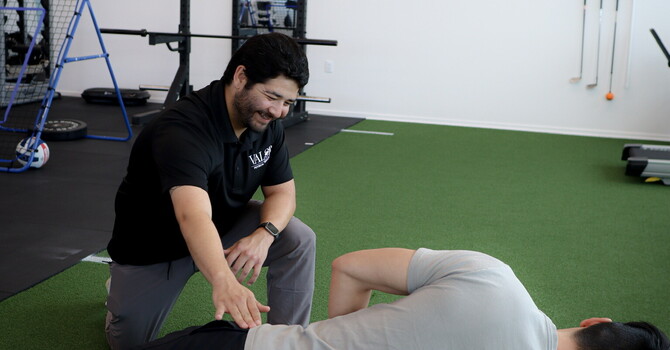
1-on-1, full-session care. In most cash-based clinics, you work directly with a licensed physical therapist for the entire session, typically 45 to 60 minutes, rather than splitting time between an aide-led exercise circuit and a few minutes with the therapist.
Continuity. You typically see the same therapist every visit, who already knows your history, your goals, and how your body has been responding, rather than being passed between whoever is available that day.
Treatment isn't capped by visit limits. Insurance often dictates how many visits are "allowed" for a given diagnosis, regardless of how your recovery is actually progressing. Cash-based care is built around your actual progress, not a predetermined visit count.
More flexibility in treatment approach. Insurance billing codes require treatment to fit into specific, billable categories. Cash-based therapists have more freedom to combine manual therapy, movement training, and education in the way that best fits your specific case, without needing every minute to map to a reimbursable code.
None of this means insurance-based PT can't produce good outcomes. Many excellent therapists work within that system and do great work under real constraints. But the structural difference in time, attention, and flexibility is real, and it's the main reason cash-based care tends to produce faster, more consistent progress for many patients.
What Cash-Based PT Typically Costs
Costs vary by clinic, location, and the therapist's experience level, but cash-based PT sessions commonly range from roughly $100 to $250 per session, with many clinics falling in the $130 to $180 range for a full 1-on-1 evaluation or treatment session.
This is often compared to a typical insurance copay, which might be $20 to $60 per visit. On paper, that makes cash-based PT look significantly more expensive. But that comparison misses two important factors:
Visit count. Insurance-based PT frequently requires more total visits to reach the same outcome, since sessions may be shorter, less individualized, or interrupted by authorization delays. A patient might need 20 visits at $40 each ($800 total) to get the same result that 8 to 10 cash-based sessions at $150 each ($1,200 to $1,500) could achieve, or in some cases, fewer cash-based visits produce a comparable or better outcome for a similar total cost.
Deductibles. Many patients with high-deductible health plans are effectively paying full price for in-network PT anyway, until their deductible is met, without receiving the 1-on-1 time or flexibility cash-based care offers.
The honest answer is that cash-based PT is not automatically cheaper or more expensive. It depends on your specific insurance plan, your deductible, how many visits you'd realistically need, and how much you value time, continuity, and flexibility in your care.
How Superbills Work
One of the most common misconceptions about cash-based PT is that paying out of pocket means insurance is completely out of the picture. That's not necessarily true.
Many cash-based clinics provide something called a superbill after each visit. A superbill is a detailed receipt that includes the diagnosis codes, procedure codes, and cost of your visit, formatted the way insurance companies require for reimbursement claims.
You can submit that superbill directly to your insurance company for possible reimbursement, even though the clinic itself is out-of-network.
A few important things to know about this process:
- Reimbursement isn't guaranteed. It depends entirely on your specific insurance plan and your out-of-network benefits.
- PPO plans are far more likely to offer some reimbursement than HMO plans, which often have no out-of-network coverage at all.
- You may still need to meet an out-of-network deductible before reimbursement kicks in.
- Reimbursement is typically a percentage of an "allowed amount," not the full price you paid, so most patients should expect partial, not full, reimbursement.
Before starting cash-based care, it's worth calling your insurance company directly and asking two specific questions: "Do I have out-of-network physical therapy benefits?" and "What percentage of the allowed amount would be reimbursed?" This single phone call gives you a much clearer picture of your actual out-of-pocket cost than guessing.
Who Cash-Based PT Is a Good Fit For
Cash-based care tends to make the most sense for:
- People who've tried insurance-based PT before without getting the outcome they wanted
- Athletes or active individuals who want a faster, more individualized return to activity
- People with high-deductible plans who are effectively paying out of pocket either way
- Anyone recovering from a complex or stubborn injury that benefits from consistent 1-on-1 attention
- People who value flexibility, direct access to their therapist, and not being limited by insurance visit caps
Specific diagnoses and conditions that cash-based PTs treat vary from clinic-to-clinic. See the full list of conditions that we treat here at Valor PT at this link: Conditions We Treat.
Who Might Be Better Served by In-Network Care
Cash-based PT isn't the right fit for everyone, and it's worth saying so directly. If your out-of-pocket budget is tight, if you have strong in-network benefits with a low copay, or if your condition is straightforward and likely to resolve quickly with standard care, an in-network clinic may be a perfectly reasonable and more affordable choice.
The Bottom Line
Cash-based physical therapy isn't a scheme to avoid insurance, and it isn't automatically the "premium" or "better" option just because it costs more upfront. It's a different model built around 1-on-1 time, continuity, and flexibility that isn't possible under most insurance reimbursement structures. Whether it's worth it depends on your specific insurance plan, your out-of-network benefits, and how much you value individualized, uninterrupted care with the same therapist every visit.
The best way to know for sure is to call your insurance provider about your out-of-network benefits, and to ask any cash-based clinic directly what a realistic treatment plan and total cost would look like for your specific situation.
Curious what cash-based, 1-on-1 physical therapy actually looks like? Schedule an evaluation with our team, and we'll walk you through your options, including how superbills work for your specific insurance plan.
Frequently Asked Questions
Will my insurance reimburse me for cash-based physical therapy? It depends on your plan. PPO plans often offer some out-of-network reimbursement, while HMO plans typically do not. The clinic can provide a superbill you submit directly to your insurance company, but reimbursement amounts vary and are usually a partial percentage of the cost, not the full amount.
Is cash-based physical therapy more expensive than in-network PT? Per session, usually yes. However, cash-based care often requires fewer total visits due to longer, fully 1-on-1 sessions, which can narrow or eliminate the total cost difference depending on your specific case and insurance plan.
What is a superbill? A superbill is a detailed receipt from your provider, including diagnosis and procedure codes, that you can submit to your insurance company to request reimbursement, even if the provider is out-of-network.
Why do cash-based clinics offer full 1-on-1 sessions? Because they aren't bound by insurance reimbursement rates, cash-based clinics don't need to see multiple patients per hour to remain financially viable, which allows the full session to be spent directly with your therapist.
Is cash-based PT right for everyone? Not necessarily. Patients with strong in-network benefits, tight budgets, or straightforward conditions may be well served by traditional in-network care. Cash-based PT tends to be the better fit for people who've had limited success with insurance-based care, want more individualized attention, or have high-deductible plans.